
DRUGHUB ONION: OFFICIAL INFORMATION TERMINAL
DrugHub Onion is one of the most-discussed darknet marketplaces accessible via the Tor network. This site serves as an independent, informational resource documenting the platform's features, security model, cryptocurrency infrastructure, and community guidelines — all sourced from publicly available data. No illegal activity is endorsed or facilitated here.
The DrugHub Market operates as a Tor hidden service (.onion), meaning it is unreachable via standard browsers and requires a configured Tor circuit to access. The platform's architecture is designed around anonymity, encrypted communications, and trustless escrow mechanisms powered by Monero (XMR).
Users researching the DrugHub Darknet ecosystem should approach this topic critically, prioritising operational security (OPSEC), harm reduction awareness, and up-to-date anti-phishing practices. This guide covers each of these topics in dedicated sections.
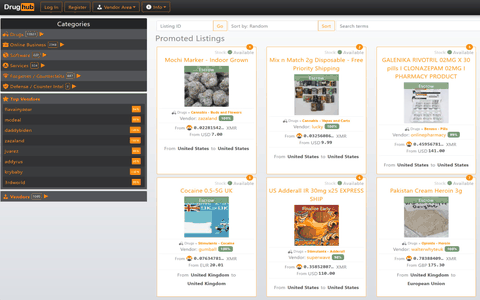
DRUGHUB MARKET: CORE PLATFORM FEATURES
The following six features characterise DrugHub Market as documented in open-source community reports, security research publications, and darknet monitoring services. These are presented for informational analysis only.
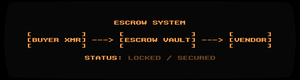


CRYPTOCURRENCY ON DRUGHUB: WHY MONERO?
Cryptocurrency emerged in 2009 with Bitcoin — a decentralised, peer-to-peer digital currency. While Bitcoin introduced the concept of trustless transactions without banks, its blockchain is fully transparent: every transaction is permanently recorded and publicly viewable. This transparency proved incompatible with privacy-sensitive use cases.
Privacy coins emerged as a direct response. These cryptocurrencies implement cryptographic protocols — ring signatures, stealth addresses, confidential transactions — to obscure the financial trail. Monero (XMR), Zcash (ZEC), and Dash (DASH) are the most prominent examples. Among these, Monero provides the strongest privacy guarantees by default, without requiring users to opt in to privacy features.
WHY DRUGHUB ACCEPTS XMR ONLY
| PROPERTY | BITCOIN (BTC) | MONERO (XMR) |
|---|---|---|
| Sender visibility | PUBLIC | HIDDEN (ring sigs) |
| Receiver visibility | PUBLIC | HIDDEN (stealth addr) |
| Amount visibility | PUBLIC | HIDDEN (RingCT) |
| Chain analysis risk | HIGH | VERY LOW |
| Default privacy | NONE | MANDATORY |
Monero's mandatory privacy model means every transaction is private by default — there is no way to accidentally send a transparent transaction. This is why DrugHub Market selected XMR as its sole accepted currency: to protect both buyers and vendors from blockchain surveillance.
LATEST MARKET NEWS
 [2025-07-15]
SECURITY ARCHITECTURE UPDATE
[2025-07-15]
SECURITY ARCHITECTURE UPDATE
 [2025-08-23]
XMR INTEGRATION UPGRADED
[2025-08-23]
XMR INTEGRATION UPGRADED
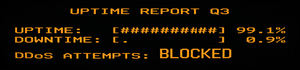 [2025-09-07]
Q3 2025 UPTIME REPORT
[2025-09-07]
Q3 2025 UPTIME REPORT
 [2025-10-22]
ANTI-PHISHING CAMPAIGN LAUNCHED
[2025-10-22]
ANTI-PHISHING CAMPAIGN LAUNCHED
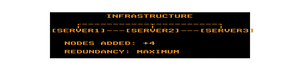 [2025-11-20]
INFRASTRUCTURE EXPANSION
[2025-11-20]
INFRASTRUCTURE EXPANSION
 [2025-12-20]
DISPUTE RESOLUTION UPDATE
[2025-12-20]
DISPUTE RESOLUTION UPDATE
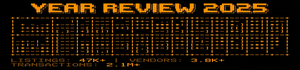 [2026-01-04]
YEAR-END REVIEW 2025
[2026-01-04]
YEAR-END REVIEW 2025
 [2026-02-18]
Q1 2026 MARKET ANALYSIS
[2026-02-18]
Q1 2026 MARKET ANALYSIS
 [2026-03-20]
APRIL 2026 PLATFORM UPDATE
[2026-03-20]
APRIL 2026 PLATFORM UPDATE
HARM REDUCTION: KEY PRINCIPLES
Harm reduction is a public health approach that aims to minimise the risks associated with drug use without requiring abstinence. Core principles include accurate drug information, access to testing services, safe consumption practices, and emergency response knowledge.
- Test substances with reagent kits (Marquis, Mecke, Simon's)
- Start with a small "allergy test" dose
- Research dose ranges at DanceSafe.org or TripSit.me
- Never use alone — have a trusted person present
- Check for dangerous drug combinations at TripSit
- Avoid mixing with alcohol or other CNS depressants
- Opioid OD: Blue lips, slow/no breathing — use Naloxone immediately
- Stimulant OD: Chest pain, seizures — cool, calm, call 112
- Psychedelic crisis: Trip-sit, calm environment, reduce stimuli
- MDMA hyperthermia: Cool down, small sips water, call EMS
- Benzo/alcohol: Do not leave person unattended — aspiration risk
- Always call emergency services if in doubt
OPERATIONAL SECURITY (OPSEC) GUIDE
Operational security refers to the practices and tools that protect your identity and activities from surveillance. On the darknet, weak OPSEC is the primary cause of de-anonymisation incidents. The following is a condensed introduction — see the full OPSEC guide for details.
- Tor hides IP, not behaviour patterns
- Metadata can de-anonymise even encrypted traffic
- Law enforcement uses correlation attacks
- One mistake can compromise entire identity
- Tor Browser (always latest version)
- Tails OS (amnesic live OS)
- PGP encryption (Kleopatra / GPG)
- Monero wallet (Feather/official GUI)
- No-log VPN (optional, Mullvad)
- Never reuse usernames or passwords
- Never access .onion from clearnet
- Never use real email addresses
- Never post photos with metadata
- Never discuss activity on social media
HOW NOT TO GET PHISHED
Phishing pages are fake replicas of legitimate darknet marketplaces designed to steal login credentials and, in some cases, drain deposited funds. The DrugHub Url is frequently imitated by malicious actors operating fake .onion sites.
- ALWAYS verify the .onion URL against the PGP-signed mirror list
- NEVER click onion links from search engines, forums, or social media
- ALWAYS bookmark verified addresses — type them manually
- Check for valid PGP signature on the page before entering credentials
- A real marketplace will NEVER ask for credentials via email or IRC
- If a page loads unusually fast, it may be a clearnet phishing proxy
- Enable 2FA (PGP) on your account immediately after registration